


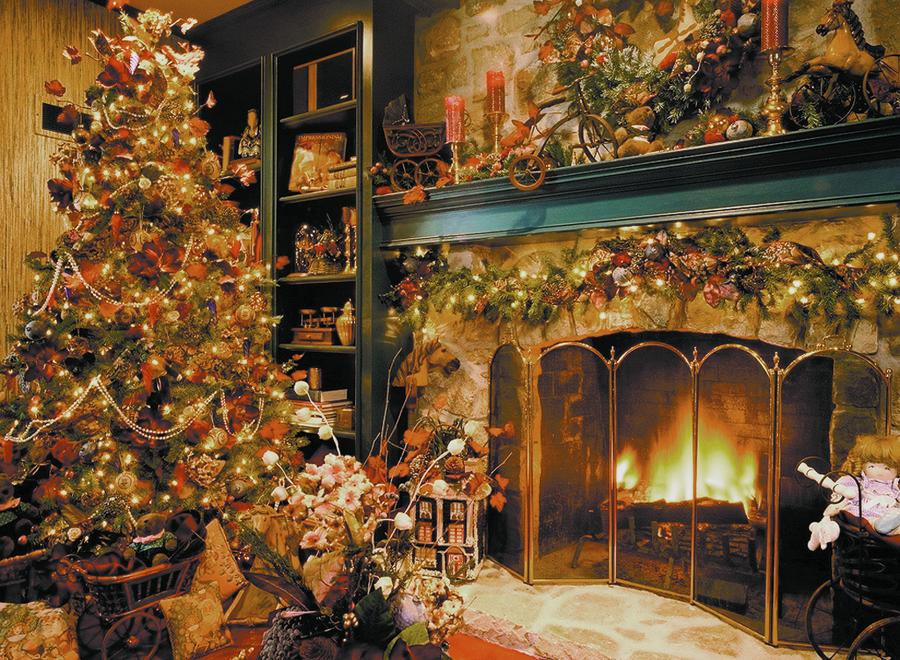
Tis the Season! The holidays are here – and so is the winter weather! With some precautions and an overall sense of safety, everyone can fully experience a happy, healthy and safe holiday season. Here are some tips culminated from various sources, including the National Safety Council:
Trees – Look for the label “Fire Resistant” on artificial trees. If buying a real tree, check for freshness by pulling the branches of the tree. If the needles are hard to pull from the branches and do not snap in half, the tree is fresh. If the trunk end is sticky with resin, the tree should retain most of its needles. Be sure to cut off a few inches of the truck before placing it in water. Make sure that the tree has water at all times. Set trees up away from any heat source and out of the way of your traffic pattern.
Lights – Don’t use lights on a metallic tree or the tree could become charged. Check all lights before using them to be sure that all lights are in order and that there are no frayed wires, loose connections or broken sockets. Make sure lights being used for outdoor decorations are certified for outdoor use. Never use lights with staples, tacks or nails. Plug all outdoor lights into circuits with ground fault circuit interrupters. Be sure that all lights are turned off before you leave the house or go to bed.
Decorations – Use only flame resistant or non-combustible material on your tree. Never light candles on or near evergreen trees, wreaths, or boughs, or curtain/drapes. Wear gloves when decorating with “angel hair” to avoid irritating your eyes and skin. Keep all live holiday plants and flowers out of the reach of children and pets.
Fireplaces – Make sure your trees and greenery are a safe distance from the fireplace. Don’t burn evergreens or wreaths to dispose of them. They can flare out of control and send flames and smoke into the room. Also, don’t burn wrapping paper because it often contains materials that can be toxic if burned.
Food and Cooking – Be sure to wash hands and anything else that has come in contact with raw poultry. Keep in mind that a stuffed bird takes longer to cook. Refrigerate or freeze leftovers in covered containers of less than two inches deep within two hours after cooking. Be sure to keep hot food away from the edge of counters and tables, so that children are not tempted to grab hold.
Shopping – Try to shop during daylight hours. If you have to shop at night, park in a well-lit area. Make sure all windows are up and your car is locked. Be sure to take your keys and keep all packages and valuable concealed, such as in the trunk. Be aware of your surroundings at all time, as well as your property, such as purse, wallet or packages you are carrying. When returning to your car, carry your keys and be ready to unlock and enter your car as quickly as possible. Upon approaching, look at the area around your vehicle, even underneath, as well as inside.
When you’re out and about in the winter elements, there are things to keep in mind to keep you safe and warm, whether you’re in your car or not. Always dress appropriately for the current climate. If you do have to go out, make sure you are dressed properly, wearing layers of clothing and making sure exposed skin is covered with masks, gloves and hats. Even if the temperature is above freezing, wind chill can add and cause conditions like frostbite and hypothermia. Dressing in layers makes it easier to adjust to weather conditions that may fluctuate. Overdressing can be as bad as under dressing. Avoid overdressing or overexertion that can lead to heat illness. Snow shoveling is good exercise, but take your time. It has been recommended to shovel for a while, then go inside and rest. When the weather gets extremely cold, it’s best to stay inside unless absolutely necessary.
Traveling – Overall, when traveling, checking weather conditions beforehand and allowing yourself extra time is always a good rule of thumb. Winter is probably the most important time to ensure that your vehicle has been well- maintained. Make sure that fluid levels have been topped up, that your oil/filter and transmission fluid/filter have been changed, where applicable. Also, be sure that your tires are properly inflated. If you need to drive, keep extra clothing and blankets in car in case of trouble. It is also advisable to keep an emergency kit in your car. If you breakdown, pull as far onto the shoulder as possible and turn emergency flashers on. Use cell phone to call for assistance, or raise your hood or tie something on to your antenna and wait for law enforcement inside your locked car. If anyone else stops to help, partially roll down your window, and ask them to call for help. Never exit your vehicle.
City officials remind drivers that “when you see a plow truck, give the truck some room to work. Don’t assume plow drivers see you. Their field of vision is limited. Please don’t tailgate, stay about four-car lengths behind the truck and try not to pass them. If you must pass, never pass on the right, take extreme caution and beware of the snow cloud. Do not park vehicles in the street or cul-de-sac during snow events. This allows the plow trucks to properly clear snow from the roads.”
At Home – Residents and businesses are asked to keep sidewalks clear of snow Make sure your address is prominently displayed. In case of emergency, fire and police could respond more quickly if house numbers are at least three inches high and easily seen in the dark. Addresses on mail boxes should be at least two inches high located in an easy-to-read spot. Residents are asked to clear snow away from fire hydrants, as well as from mail boxes so house numbers are visible, enabling the safety services the fastest possible access to your home, in case of emergency.
Be extremely careful when using auxiliary heat, such as electric or kerosene heaters, wood burning stoves or fire places, as they can easily attribute to a wintertime fire. Children and adults alike are reminded to stay off ponds – they’re not as frozen solid as you may think.
Snow Removal – In recent winters, people have been reported plowing snow from their driveways across the road and to the other side of the street. In the city of North Royalton, it is against the law for residents and businesses to plow snow into the street.
In the City of North Royalton, it is against the law for residents and businesses to plow snow into the street. The ordinance reads as follows: “No person, company, contractor, or private snow removal company or entity while in the process of snow plowing or removal shall deposit or cause to be deposited any snow and/or ice that would obstruct, hinder, block or cause injury to any public or private road, sidewalk, driveway, fire hydrant, or to the landscaping of any property. All snow from any premises shall be deposited onto the same premises from which it was moved, plowed or removed. City or State snow plow operations are exempt from this section.” As stated, this ordinance applies not only to commercial snow plowing/removal companies, but also to individuals. Those not abiding could face a misdemeanor charge. “Generally, our snow plows do not hit mailboxes, however, the weight and force of the snow coming off our plows can damage or knock down a mailbox,” according to city officials. “We recommend residents inspect their mailbox prior to winter season to make sure it is structurally sound. Make sure all screws, nails, bolts are secure, post is in good condition and securely in the ground. The City will repair mailboxes if damaged by City snow plow operations — contact the Service Department at 440-582-3002. If your tree lawn has been damaged by city snow plows, please call the Service Department. Repairs will begin in early spring or when weather permits.”
By GLORIA PLEVA KACIK
Contributing Writer